Culture & Traditions
The soul of Ardenweald lies not in stone or steel, but in the living traditions woven through every facet of its society. From druidic practices that shape the forest itself to festivals that dissolve the boundary between earth and spirit, Ardenweald’s culture reflects a civilization that understands itself as part of nature, not master of it.
Back to World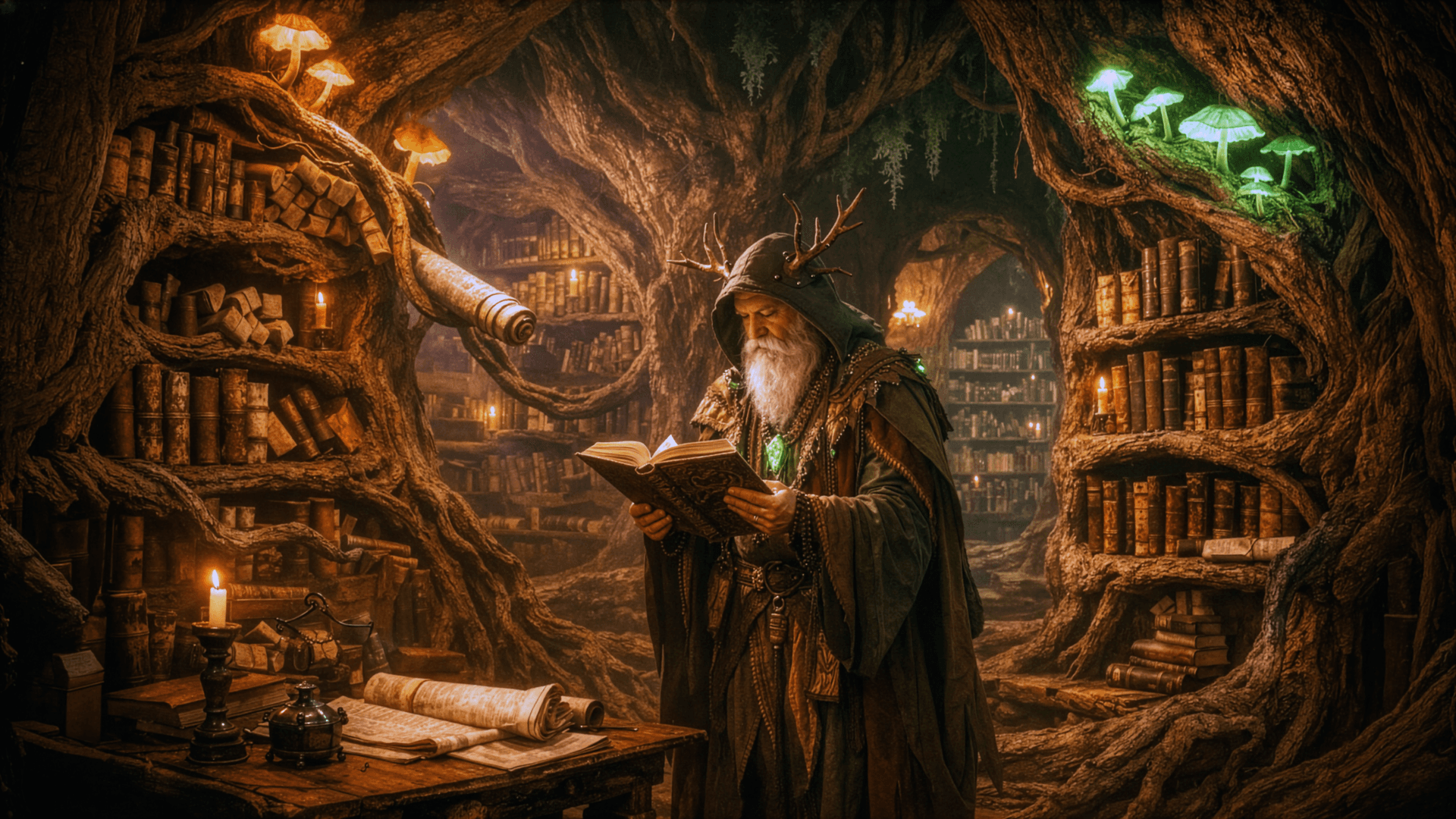
A druid dwelling, where home and forest are one
The Living Tradition
To understand Ardenweald is to understand that culture and nature are inseparable. The festivals celebrated here are not entertainments staged by a civilization, but expressions of harmony with natural cycles. The crafts produced are not commodities but extensions of the craftsperson’s connection to their materials. Even daily routines reflect a deep understanding of humanity’s place within the greater ecosystem.
This perspective is so fundamental that it shapes everything from how food is grown to how disputes are resolved, from how children are raised to how the dead are honored. To walk through Ardenweald is to experience a civilization built on entirely different principles than the stone kingdoms beyond the Greenwood.
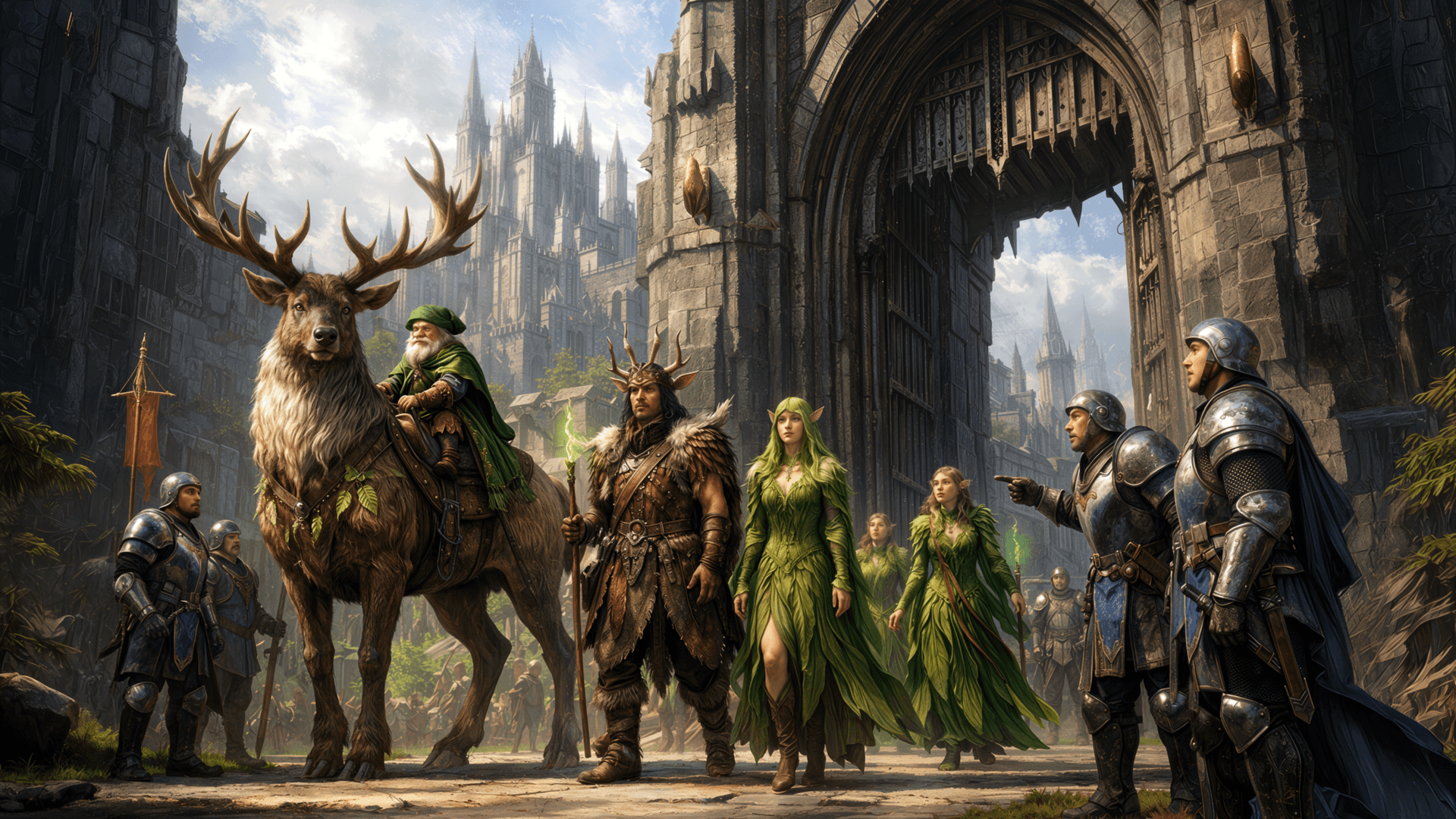
Councils in the glades — where voices of forest and people unite
Druidic Traditions
The Weavers of the Living World
Druidic magic forms the spiritual and practical foundation of Ardenweald society. Druids are not merely religious leaders or spellcasters — they are the architects of life itself, working in harmony with the ancient forces that flow through root and leaf. Through their magic, they influence the growth of plants, communicate with the creatures of forest and fang, and harness the elemental forces that shape the world.
Daily Integration
In Ardenweald, druidic practice is woven into every aspect of daily existence. A druid might begin the day by communing with a grove to understand the mood of the forest, guiding its energies toward growth or defense. They tend sacred gardens where every plant is tended with intention, where healing herbs flourish in carefully maintained glades, and where the boundary between wilderness and cultivation dissolves into seamless harmony. Druids serve as healers, counselors, teachers, and peacekeepers — their role transcends any single function.
Sacred Groves and Ritual Sites
Throughout the kingdom lie sacred groves where druidic magic concentrates into tangible power. These places vibrate with ancient energy, their stones and trees grown over millennia. In the Grove of Whispers near Greenhaven, druids perform ceremonies that align with celestial events. The Moonwell of Mistwood is said to grant visions to those who meditate by its waters at midnight. The Thornheart — hidden deep in the wilderness — is believed to be where the first druids made their ancient pact with the forest itself. Access to these sites is restricted; only those who understand druidic principles may enter with the blessing of the Archdruid.
The Moonlit Revel
Festival of Night and Music
When the full moon rises above the canopy of the Great Greenwood, Ardenweald transforms into a realm of enchantment. The Moonlit Revel is celebrated monthly — a festival that dissolves the boundaries between earth and spirit, work and joy, the mortal realm and the fey. For three nights, the entire kingdom comes alive with music, dance, storytelling, and magic.
The Celebration Unfolds
The Revel begins at dusk when lanterns of captured moonlight are hung from every branch and platform. In Greenhaven’s central groves, wooden stages are erected from living wood, their surfaces smoothed by druidic magic. Musicians take their positions, and the first notes ring out — melodies played on instruments carved from Whisperwind’s resonant woods, sounds that seem to make the very air shimmer. Satyrs lead the revelry with their wild, untamed energy, playing pipes and drums that pulse with primal rhythm. Dryads emerge from their trees for the first time in months, their bark-skin gleaming in moonlight as they join the dancers.
Who Participates
Everyone joins the Moonlit Revel — from the youngest saplings of elven children to the Archdruid himself. Wood Elves dance with Forest Gnomes who caper about with infectious laughter. Wildlings guide visitors through the throngs. Even Treants, moving with their slow majesty, arrive at central clearings to observe. The Revel is a moment of collective joy, where hierarchy loosens and the kingdom celebrates its unity. Food is shared freely — fresh fruits that taste of starlight, wines fermented from forest berries, and bread baked in ovens warmed by elemental flames. Stories are told that recount the kingdom’s history, ancient legends, and tales of adventure.
The Deeper Meaning
Beyond the surface celebration, the Moonlit Revel serves a spiritual purpose. It reinforces the bonds between the people and the land, reminding all inhabitants that they are part of something greater than themselves. The revels honor the passage of time and the cycles of nature. They are moments when the veil between worlds grows thin, and some claim that ancient spirits of the forest appear to dance alongside their living descendants.
The Rite of Renewal
Passage into Adulthood
When a young elf reaches the age of maturity — typically around their 50th year, still young by elven standards — they must undertake the Rite of Renewal. This sacred passage separates childhood from adulthood, testing not just physical endurance but spiritual readiness and connection to the Greenwood.
The Night Alone
The initiate is led by druids deep into the wilderness, far from the safety of the treehouse cities and the knowledge of civilization. Armed only with a simple knife, a waterskin, and the clothes on their back, they are left at sunset with a single command: survive the night, find your truth, and return before the sun touches the opposite horizon. The darkness is profound in the deep forest, where creatures both mundane and magical roam. The initiates must navigate by instinct, find water and shelter without tools, and confront their fears in solitude.
What They Must Accomplish
The trial is as much spiritual as it is physical. Initiates often report profound experiences during the night — visions granted by the forest itself, encounters with animal guides who show them something of their future path, or moments of clarity where they understand their place in the greater web of life. Some find a place of perfect shelter that seems to appear just when needed. Others encounter a forest spirit who poses a riddle or test of character. There is no single formula for success — each rite is unique, shaped by the individual and the forest’s response to them.
Return and Recognition
Those who return are transformed. The community gathers at the point of return to greet the new adult, and the young elf recounts their experience to the assembled druids. This story becomes part of their identity, referenced throughout their life. Many initiates discover their vocation through the Rite — a young elf might return understanding they are meant to be a healer, a warrior, a musician, or a teacher. The community celebrates each return with feasting, the newest adult receives a name-gift (a tree planted in their honor), and they are formally welcomed into the ranks of adult society with all the rights and responsibilities that entails.
Daily Life in the Canopy
Living Among the Leaves
Ardenweald’s cities are unlike any other civilization on Morgath. The treehouse settlements are not haphazardly built structures but carefully cultivated communities where the boundary between construction and nature is beautifully blurred. In Greenhaven, platforms spiral around the trunks of ancient trees, some so wide they could accommodate a manor. Bridges of woven vine and shaped wood connect the platforms, swaying gently in the wind. Some are high enough that clouds drift through them at dawn. Others descend into shadowed groves where perpetual twilight reigns.
Sustenance and Harvest
Food production in Ardenweald operates on principles of harmony rather than exploitation. The kingdom never cuts a tree for lumber — instead, druids coax the trees themselves to provide what is needed. Branches are persuaded to grow in desired shapes and thicknesses. Fruits and nuts fall in abundance from the canopy, and no tree is ever stripped bare. Terraced gardens grow on the largest platforms, where vines heavy with fruit cascade downward and root vegetables grow in rich forest soil. Hunters take only what the forest offers — game animals that have died of natural causes or are culled through careful population management. Fishers in the numerous forest rivers and ponds practice catch-and-release, taking only what is needed.
Work and Daily Rhythms
Daily life in the canopy follows the seasons and the mood of the forest. Morning might begin with meditation and communion with the trees, allowing druids to sense the forest’s needs for the day. Midday sees active labor: maintaining platforms, tending gardens, gathering medicines, crafting tools, and teaching the young. Afternoons are often reserved for artistic pursuits — music, storytelling, weaving, or philosophical debate. As dusk falls, the community gathers to share meals and exchange news. There is no formal 'work week' — instead, the rhythm follows natural cycles. During spring, there is intensive labor of renewal. Summer sees festivals and celebrations. Autumn is the season of harvest and preparation. Winter is quieter, a time for craft work, study, and spiritual deepening.
Travel Between Settlements
Moving through the canopy requires skill and bravery. Some settlements are connected by bridges, but for longer journeys, Ardenians rely on a combination of methods. Trained riders guide giant forest eagles — majestic creatures that can carry two passengers. For ground travel, pathways wind through the forest, marked by runes visible only to those who know how to read them. Some settlements are connected by natural vine-roads that descend to the forest floor for sections, then rise again. The journey from Greenhaven to Mistwood Village typically takes three days, a pilgrimage that many young elves undertake to complete their education.
The Role of Different Races
The diverse peoples of Ardenweald have found their own niches in this society. Wood Elves form the spiritual and administrative core, with many becoming druids. Forest Gnomes excel at crafts, alchemy, and the creation of potions and magical items. Wildlings serve as scouts, hunters, and diplomats with the outside world. Satyrs are the musicians, entertainers, and keepers of stories, their presence ensuring that joy and revelry never fade from the kingdom. Treants serve as living guardians of the deepest groves, their ancient wisdom consulted on matters of great importance. Dryads and Nymphs are bound to specific sacred places, their presence sanctifying the land and maintaining the magical equilibrium of key locations.
Arts & Craftsmanship
The Music of Whisperwind
Ardenweald is a realm of music. The most exquisite instruments in all of Morgath are crafted in Whisperwind Hamlet, where the wind itself seems to whisper melodies. Instruments are fashioned from specially selected woods that have been shaped by druidic magic to maximize their resonance. A lute made from Whisperwind wood can produce tones of such purity and depth that listeners report hearing colors in the music. Pipes crafted there carry notes that seem to echo with the memory of wind through ancient forests. Drums carved from wood with perfect natural symmetry create rhythms that synchronize with heartbeats.
Enchanted Crafts
Beyond music, Ardenweald’s craftspeople create wonders imbued with subtle magic. Forest Gnome alchemists brew potions that heal wounds, clear the mind, and grant visions. Herbalists in Mistwood create remedies for every ailment known to the mortal races. Leather workers craft armor and clothing from hides that have been magically treated to be light as silk but hard as stone. Weavers create tapestries and textiles whose patterns seem to shift and change depending on the angle of view, their colors remaining vivid for centuries without fading.
Woodworking Without Harm
Perhaps the most remarkable craft is the art of tree-shaping. In Silvergrove and other settlements, specialized craftspeople work with druids to coax living wood into desired forms. A chair might grow over a season, its seat becoming perfectly contoured to support a body. A tool handle might be shaped to fit a specific hand’s grip. Furniture is not built but cultivated, resulting in pieces of extraordinary beauty and functionality. The principle is fundamental to Ardenweald culture: take nothing that the tree is not willing to give, and the tree will provide abundantly.
Artistic Expression
Beyond practical crafts, Ardenweald produces artists of exceptional talent. Poets compose verses that are memorized and recited at festivals. Dancers achieve movements so fluid they seem to defy the laws of physical form. Sculptors carve stone and bone into figures of remarkable beauty, often working collaboratively with druids to embed subtle enchantments that make the art seem almost alive. Visual art focuses on natural themes — depictions of forest creatures, celestial phenomena, and the transformation of seasons. These artworks are not created for trade but for the enrichment of the community and the honoring of the traditions that sustain them.
Core Values
Balance Above All
The fundamental value underlying all of Ardenweald culture is balance. This is not mere philosophical idealism but a practical necessity. The forest is a delicate ecosystem, and any disruption threatens the whole. Balance means taking only what is needed. It means knowing when to act and when to observe. It means understanding that strength and gentleness, growth and decay, light and darkness are all necessary parts of the greater whole. This principle shapes everything from law to daily behavior to long-term strategy.
Respect for Nature
Respect for the natural world is not sentiment but sacred duty. Every living thing, from the mightiest Treant to the smallest insect, has a role in the forest’s web of life. The deliberate destruction of forest life is not merely a crime but a violation of fundamental moral law. This extends to the kingdom’s external policies — the kingdom views the industrial exploitation of forests by Fort Valiance and other human settlements as an existential threat, not merely to Ardenweald but to all life on Morgath.
Druidic Traditions as Law
The Old Ways — the druidic traditions passed down through ten thousand years — form the legal and moral foundation of Ardenweald society. There is no written law code, but rather a collective understanding of right conduct developed through millennia of living in harmony with the forest. Disputes are resolved not through punitive justice but through restoration and rebalancing. A person who harms another is not imprisoned but required to make restitution and to undergo ritual healing under the guidance of druids. The most serious crime is betrayal of the kingdom or harm to the forest itself.
Isolationism as Protection
Ardenweald’s isolationist policies are rooted in hard-won understanding. Contact with the outside world brings trade, yes — but it also brings knowledge of industrial techniques, pressure to exploit resources, and subtle corruptions of values. By limiting contact with external powers, Ardenweald protects its culture and its forest. This is not hatred of outsiders but recognition that exposure to different values threatens the delicate balance the kingdom has maintained. Selective trade with trusted partners is permitted, but settlement by outsiders is forbidden, and the boundaries of the Greenwood are fiercely defended.
Living as Part of the Whole
The deepest Ardenweald value is the understanding that individuals are not separate from the forest but part of it. A person lives, breathes, and exists as an extension of the greater ecosystem. This is reinforced constantly — through ritual, through art, through daily practice, and through the fundamental structure of society. When an elf dies, their body is not buried but returned to the forest, offered to become nourishment for new growth. When a child is born, a tree is planted to grow alongside them, creating a lifelong bond. This seamless integration of self and nature is what makes Ardenweald culture fundamentally different from all other civilizations on Morgath.
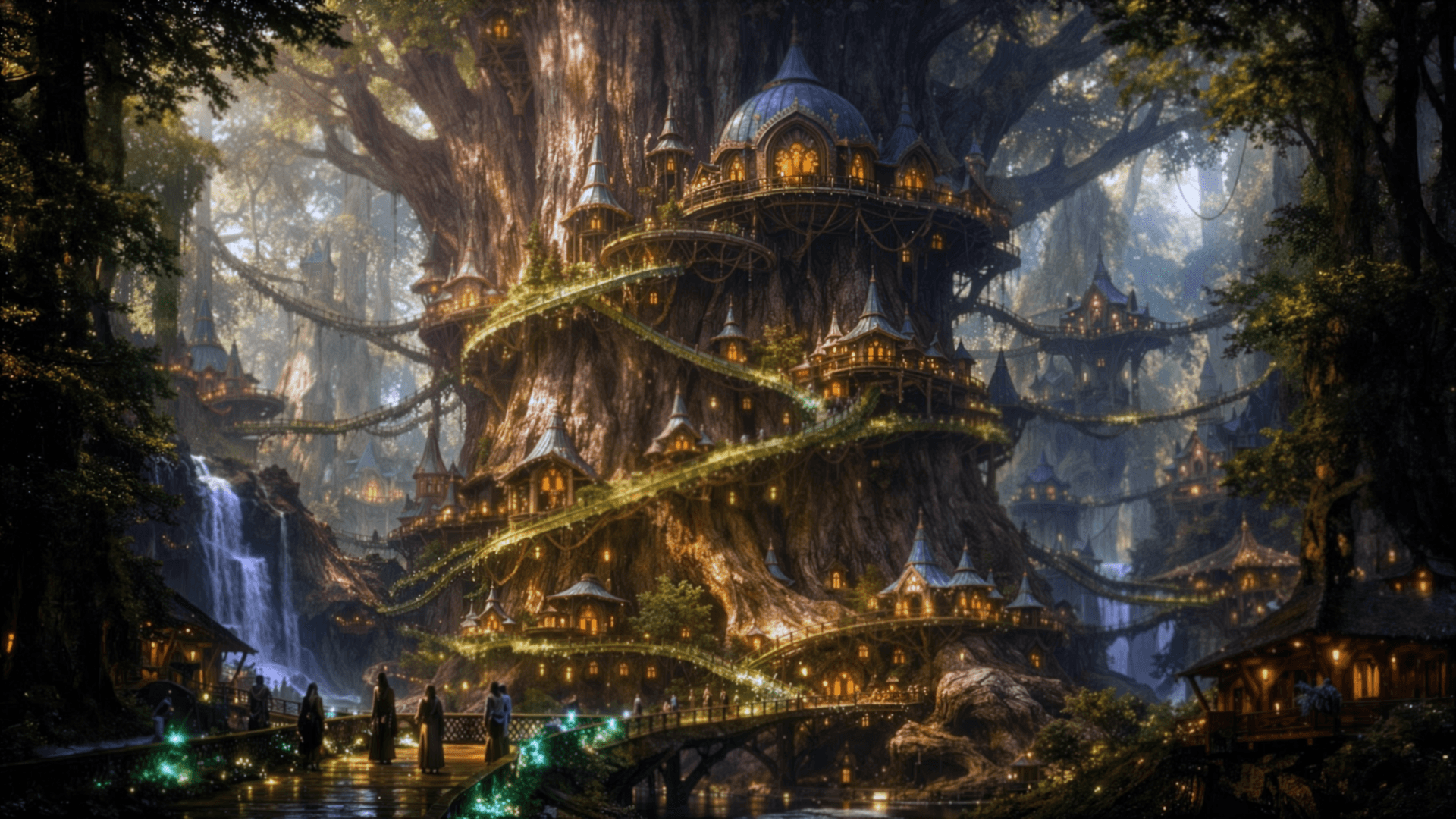
Home is not a place built — it is a place grown
The Integrated Whole
Spiritual Alignment
Every cultural practice is grounded in spiritual reality. Rituals, festivals, and daily customs reinforce the understanding that the spiritual and physical worlds are one.
Community Bonds
Culture binds individuals into a unified whole. Through shared celebration, ritual, and creative expression, Ardenians understand themselves as cells in a larger organism.
Knowledge Transmission
Ardenweald has no written language for practical matters. Knowledge flows through storytelling, demonstration, and direct mentorship, preserving the traditions across generations.
Resistance & Preservation
By maintaining strong cultural traditions, Ardenweald resists the homogenizing pressures of external civilizations and protects what makes it unique.
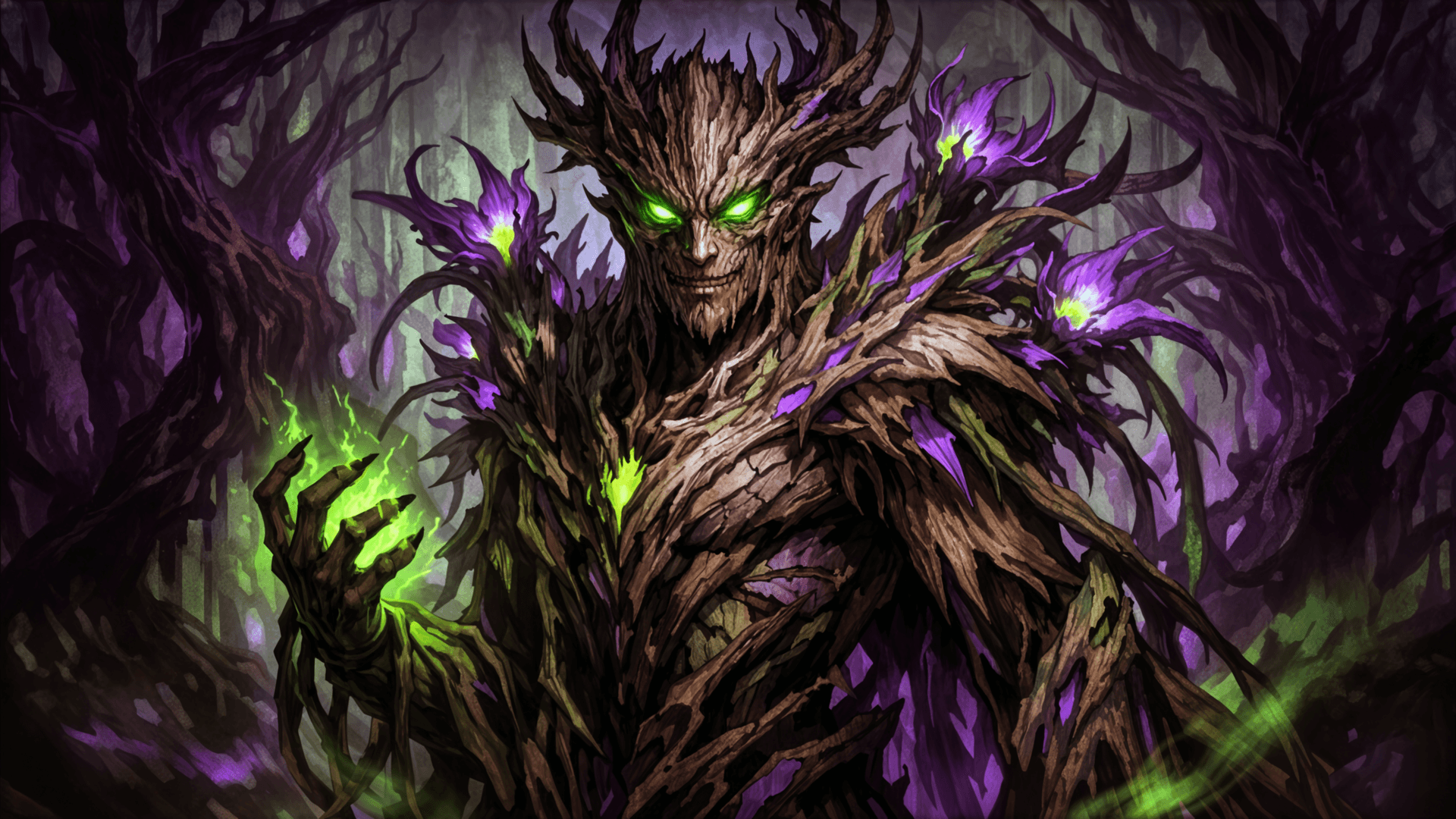
The sentinels are culture made flesh — guardians of all Ardenweald holds sacred
Expressions of the Culture
Festivals Throughout the Year
Spring Renewal: The forests awaken, and druids perform rituals to encourage abundant growth.Summer Solstice: The longest day is celebrated with contests of skill, feats of magic, and all-night revels.Autumn Harvest: Gratitude is expressed for the forest’s bounty, with ceremonies that honor what will sustain the kingdom through winter.Winter Silence: As the forest rests, the kingdom enters a quieter time of introspection and spiritual deepening.
Daily Rituals
Dawn Communion: Many Ardenians begin the day in silent communion with the forest, seeking guidance.Shared Meals: Communal eating reinforces bonds and ensures no one goes hungry, a practical expression of community values.Evening Stories: As twilight falls, elders gather crowds to share tales and wisdom.Moonrise Meditation: As the moon rises, many pause their evening activities to acknowledge the passage of time.
Culture as Destiny
Ardenweald’s culture is not a museum piece preserved in amber, but a living, breathing expression of a civilization’s deepest values. It is constantly evolving, yet firmly rooted in principles established over millennia. For the people of the Greenwood, culture is not something separate from daily life — it is daily life, the lens through which they understand themselves and their place in a world far larger than any individual or kingdom. To truly know Ardenweald is to understand that its greatest strength lies not in the prowess of its warriors or the power of its druids, but in the unshakeable unity of its people, bound together by traditions that remind them, daily, of their common purpose.